

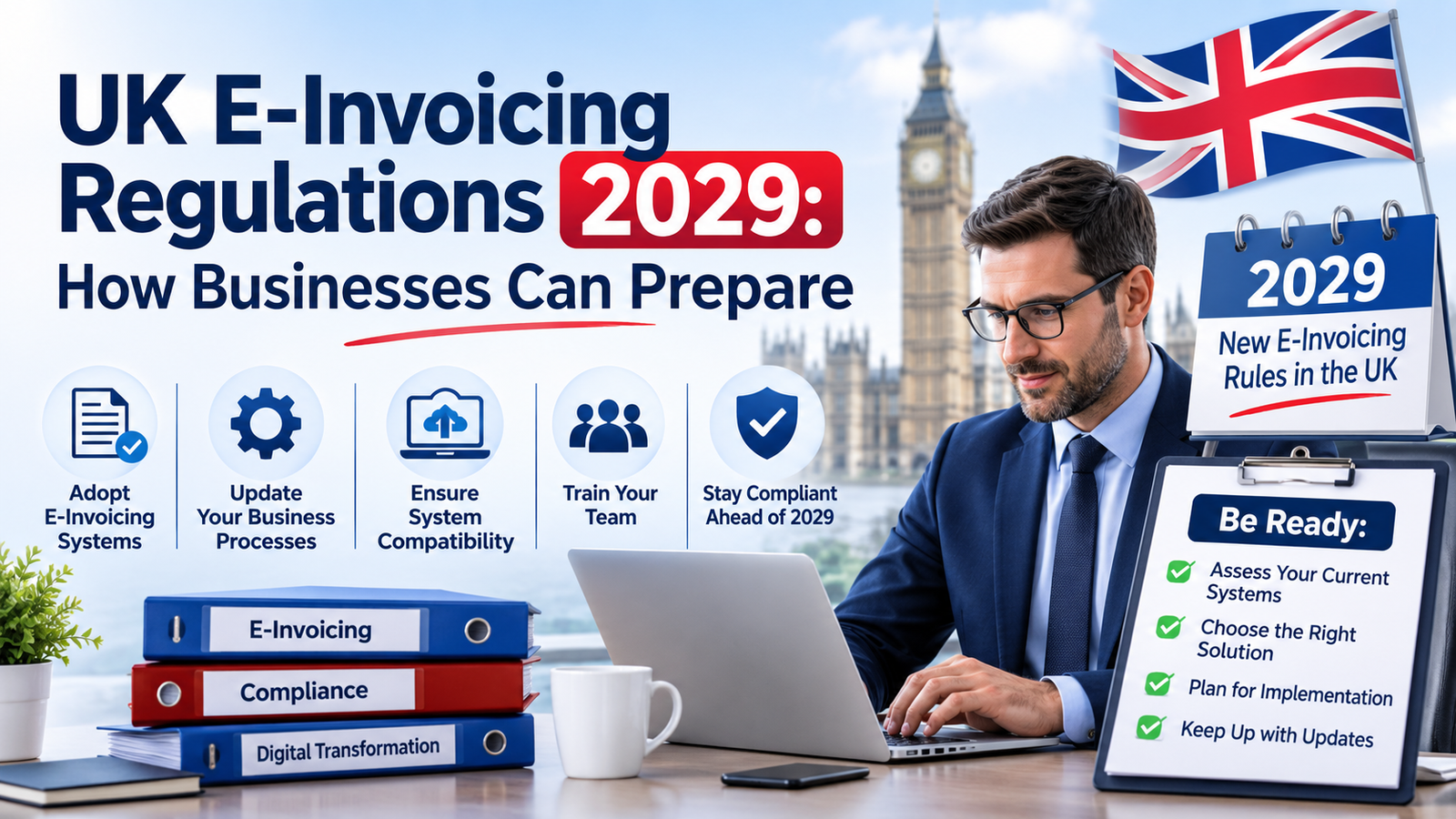
The UK is moving towards a more digital approach to business invoicing, with mandatory electronic invoicing (e-invoicing) for VAT invoices scheduled to begin on 1 April 2029. This change will affect VAT-registered businesses and organisations that issue or receive VAT invoices.
For small businesses, limited companies, freelancers and other VAT-registered organisations, understanding these upcoming requirements is an important step towards better financial management and tax compliance.
In this guide, HMR Accountancy explains what UK e-invoicing means, why the regulations matter and how businesses can prepare for the transition.
What Is E-Invoicing in the UK?
E-invoicing is the electronic exchange of structured invoice information directly between a supplier’s and customer’s financial systems.
Unlike a traditional paper invoice or a simple PDF attachment, a structured e-invoice contains machine-readable information that accounting software can automatically process.
This helps businesses reduce manual data entry, minimise invoicing errors and improve financial record management.
The UK government has announced that VAT invoices must be issued electronically from 1 April 2029, subject to applicable exemptions.
When Will E-Invoicing Become Mandatory in the UK?
The UK government has confirmed that mandatory e-invoicing for VAT invoices will take effect from 1 April 2029.
The implementation roadmap includes several important milestones:
- Spring 2027: Government consultation on proposed technical e-invoicing standards.
- October 2027–April 2028: Publication of detailed requirements, including scope, exemptions and technical standards.
- April 2028–April 2029: Businesses and software providers prepare, test and implement compliant systems.
- 1 April 2029: Mandatory VAT e-invoicing requirements take effect.
The government has also announced that Peppol will be the UK’s core interoperability framework for e-invoicing.
Businesses should monitor HMRC announcements as detailed implementation requirements develop.
Which UK Businesses Will Be Affected?
The upcoming e-invoicing requirements are expected to apply broadly to VAT-registered businesses and organisations that issue or receive VAT invoices.
This includes:
- Limited companies registered for VAT.
- VAT-registered sole traders.
- Partnerships and professional service firms.
- VAT-registered charities and other organisations.
- Public sector bodies within the requirements.
Specific exemptions, including provisions for digitally excluded businesses, are being developed.
Non-VAT-registered businesses may also be able to use e-invoicing voluntarily, depending on their commercial requirements.
Key Benefits of E-Invoicing for UK Businesses
Moving towards digital invoicing offers several practical benefits:
1. Reduced Administrative Work: Automated invoice processing reduces repetitive paperwork and manual data entry.
2. Improved Accuracy: Structured invoice information can help minimise common errors in invoice details and financial records.
3. Better Cash Flow Management: Faster invoice processing can support more efficient payment tracking and financial planning.
4. Easier Accounting: Digital invoice data can integrate with accounting software, helping businesses maintain organised records.
5. Improved Compliance: Consistent digital processes can make it easier to manage invoicing information and meet record-keeping responsibilities.
How Can Businesses Prepare for UK E-Invoicing Regulations?
Although mandatory implementation is scheduled for 2029, businesses can begin preparing now.
Here are five practical steps:
1. Review Existing Invoicing Processes: Identify how your business currently creates, sends, receives and stores invoices.
2. Evaluate Accounting Software: Check whether your current accounting provider plans to support the upcoming UK e-invoicing requirements and Peppol connectivity.
3. Organise Financial Records: Maintain accurate sales invoices, purchase records and transaction information.
4. Train Your Finance Team: Help employees understand digital invoicing processes and the importance of accurate financial information.
5. Seek Professional Accounting Advice: Consult an experienced accountant to understand how the changes may affect your business operations and compliance responsibilities.
How HMR Accountancy Can Help Your Business
Preparing for digital invoicing involves more than simply changing the way invoices are sent. Businesses also need organised financial records, suitable accounting systems and an understanding of changing compliance requirements.
HMR Accountancy supports UK businesses with professional accounting, bookkeeping, tax and financial management services.
Whether you operate a small business, manage a limited company or work as a self-employed professional, getting the right accounting support can help you prepare for upcoming regulatory changes with greater confidence.
Contact HMR Accountancy to discuss your accounting requirements and plan for the transition towards digital invoicing.
Frequently Asked Questions (FAQs)
1. When will e-invoicing become mandatory in the UK?
Mandatory e-invoicing for VAT invoices is scheduled to begin on 1 April 2029 for VAT-registered persons, subject to specific exemptions.
2. Is e-invoicing compulsory for all UK businesses?
The requirement is expected to apply broadly to VAT-registered businesses and organisations issuing or receiving VAT invoices. Certain exemptions are being developed.
3. Is a PDF invoice considered an e-invoice?
A PDF is an electronic document, but it is not necessarily a structured e-invoice. The upcoming regime is based on structured, machine-readable invoice data.
4. What is Peppol in UK e-invoicing?
Peppol is an interoperability framework that enables different business software systems to exchange structured electronic documents securely and consistently. It will be the UK’s core e-invoicing framework.
5. How can an accountant help with e-invoicing preparation?
An accountant can help review invoicing processes, maintain accurate financial records, assess accounting software and prepare businesses for new digital compliance requirements.
Final Thoughts
UK e-invoicing represents an important step towards modernising business accounting and VAT administration. Although mandatory implementation is not scheduled until April 2029, early preparation can help businesses avoid last-minute challenges.
With professional guidance from HMR Accountancy, businesses can strengthen their accounting processes, improve financial organisation and prepare for the UK’s changing digital invoicing landscape.