
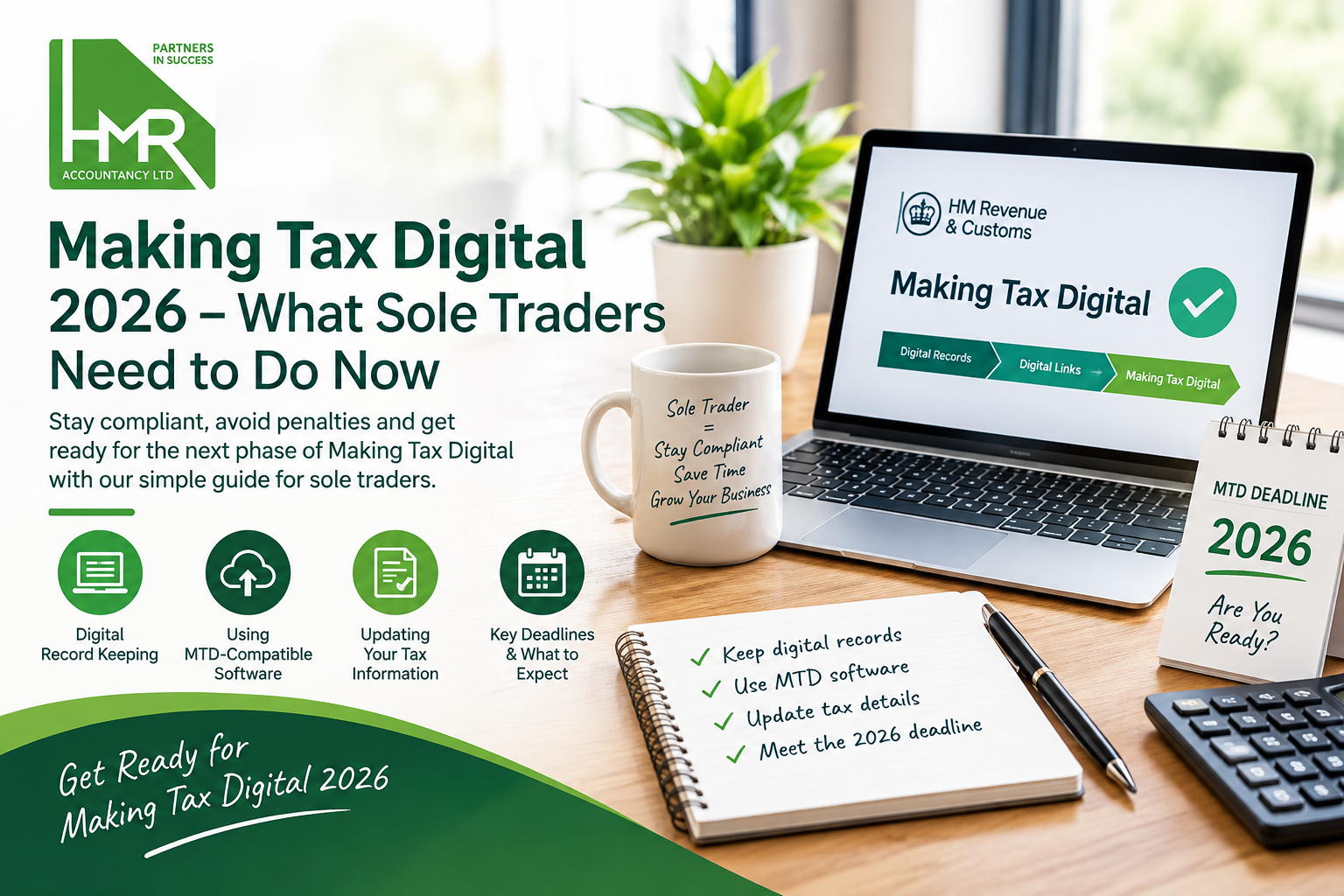
Making Tax Digital (MTD) for Income Tax is now a major compliance requirement for many UK sole traders. From 6 April 2026, sole traders and landlords with qualifying income above £50,000 must use compatible software to keep digital records and send quarterly updates to HMRC.
If you are a sole trader approaching the MTD threshold, preparing early can make the transition much easier. In this guide, HMR Accountancy explains what you need to know and the practical steps to take in 2026.
What Is Making Tax Digital for Income Tax?
Making Tax Digital for Income Tax is HMRC’s move towards a more digital tax system. Instead of keeping business records manually and reporting income only through an annual tax return, eligible sole traders and landlords need to maintain digital records and send quarterly updates using compatible software.
The aim is to give HMRC more regular information about income and expenses while helping taxpayers maintain more organised financial records.
Who Needs to Follow MTD in 2026?
From 6 April 2026, MTD for Income Tax applies to sole traders and landlords whose combined qualifying income from self-employment and property is more than £50,000.
The rollout will expand further:
- 6 April 2026: qualifying income over £50,000
- 6 April 2027: qualifying income over £30,000
- 6 April 2028: qualifying income over £20,000
Therefore, even if you are not required to join MTD immediately, preparing your bookkeeping systems now can help you avoid a last-minute change later.
What Do Sole Traders Need to Do?
1. Check Whether You Are Required to Join
Start by reviewing your self-employment and property income. If your qualifying income puts you within the relevant MTD threshold, check your HMRC position and registration requirements.
2. Start Keeping Digital Records
MTD requires digital records of relevant business income and expenses. Paper receipts and spreadsheets alone may not meet the complete requirements where MTD-compatible software is required.
Keeping records digitally also makes it easier to track:
- Business income
- Allowable expenses
- Bank transactions
- Invoices and receipts
- Tax-related information
3. Choose MTD-Compatible Software
You will need software that works with Making Tax Digital for Income Tax. The software should help you maintain digital records and submit required information to HMRC.
Choosing software early gives you time to understand the system and correct any bookkeeping issues before reporting deadlines.
4. Prepare for Quarterly Updates
Eligible taxpayers will need to send quarterly updates to HMRC through compatible software. These updates provide information about income and expenses during the relevant period.
Remember that quarterly updates are part of the MTD process—they are not simply four separate annual tax returns.
5. Keep Your Records Accurate
Digital reporting does not remove the importance of good bookkeeping. Incorrect categorisation, missing expenses or incomplete records can create problems when preparing your tax position.
A regular bookkeeping routine can make MTD compliance significantly easier.
Why Should Sole Traders Prepare for MTD Early?
Preparing early can help you:
- Reduce the risk of missed reporting requirements
- Keep financial records organised
- Understand your tax position throughout the year
- Identify bookkeeping errors sooner
- Make quarterly reporting easier
- Reduce year-end stress
- Get professional help before deadlines become urgent
For many sole traders, the biggest challenge isn’t the technology—it’s changing from occasional bookkeeping to a consistent digital record-keeping process.
How HMR Accountancy Can Help With MTD
HMR Accountancy supports self-employed individuals with accounting, bookkeeping and tax compliance services. The firm’s MTD packages include compatible accounting software, quarterly digital tax submissions, review of income and expense records, digital record-keeping support, annual tax return filing and software training.
HMR Accountancy also provides self-assessment tax return preparation and bookkeeping services for sole traders.
With the right accounting support, you can focus on running your business while keeping your MTD responsibilities organised.
Conclusion
Making Tax Digital 2026 represents an important change for eligible sole traders and landlords. If your qualifying income is above the £50,000 threshold, you should make sure your records, software and reporting processes are ready for the MTD requirements.
Even if you are below the current threshold, developing good digital bookkeeping habits now can prepare your business for future MTD changes.
Need help preparing for Making Tax Digital? HMR Accountancy can help you manage digital records, quarterly submissions, bookkeeping and self-assessment requirements.
FAQs About Making Tax Digital 2026
1. Is Making Tax Digital mandatory for sole traders in 2026?
Yes. From 6 April 2026, MTD for Income Tax applies to sole traders and landlords with qualifying income above £50,000.
2. What software do I need for Making Tax Digital?
You need software that is compatible with HMRC’s Making Tax Digital requirements and can maintain digital records and submit the required information.
3. Do I need to send quarterly tax returns?
You need to send quarterly updates through compatible software if MTD applies to you. These updates form part of the MTD process and are separate from the final annual tax submission.
4. What happens if my income is below £50,000?
You may not be required to follow MTD for Income Tax in 2026, depending on your circumstances. However, the income threshold is scheduled to reduce in future years, so preparing early can be beneficial.
5. Can an accountant manage MTD for me?
Yes. An accountant can help with digital bookkeeping, compatible software, quarterly submissions and annual tax return requirements. HMR Accountancy offers MTD packages designed to support eligible self-employed individuals.